Wednesday, December 4, 2013

Blog Post Sixteen

the_end
Well, I guess it is true when they say the time flies when you are having fun! I cannot believe this is my final post for EDM310, but yet, I am so happy to be taking so much with me from this one class. I have learned so many things that have completely changed how I think about educating. I am very surprised going back and reading my first post, because I would not change much to it. Although this might seem like EDM310 did not change how I thought, it is quite the opposite. After watching Sugata Mitra’s “School in the Cloud” and reading Krissy Vendosdale’s blog, I was already thinking in a way that I have never been shown before in my life. By this first blog post, I was already thinking a whole new way of educating. I have always been taught in schools from a white board in a standard lecture setting, and as a future educator, I saw nothing wrong with this before EDM310. I know now that I would NEVER teach my students in this setting. Because of EDM310, I now want to change my future math classroom from what is typically expected in one. I want an energetic math learning experience for my children! I want to use project based learning and use what they learn to apply it to real life situations.

If I had to change things about my first blog post, I would add more project based learning and technology. Originally, when I started this class, I was an elementary education major, but EDM310 actually helped me realize that in order to help my students be the best learners they could be, I have to be the best teacher I can be. EDM310 has inspired me to become a wonderful math teacher and help children not to only learn what we are doing in math, but to maybe even enjoy math. So, as a future math teacher and not elementary, I would take out much of the art use as a tool in my classroom, and add technology instead. Throughout this course, I have seen the role technology plays in the classroom, and I think this would be essential for mine. Through my C4T’s and extending my PLN, I have found many math resources that I would have never been able to find before such as the math PBL resources I found in Michael Gorman's Blog. I also would add the Smart Board to my future classroom. Before my assignments in EDM310, I have not had much experience with smart boards, and now, I realize how useful they are. In my first blog post, I said “As Mitra, I would like my students to be the facilitators of their learning. They should be able excel beyond a curriculum, and take on the roles of researchers in order to continue interest in commonly “boring” subjects.” I think this is actually ironic, since I am becoming a math teacher now. If I had to rewrite my first post, most of what I said would stay. I still want my students to be active, confident learners, and I no longer want to play the strong head role as the traditional teacher. As a 21st century teacher, I want to be innovative, electric, and always a lifelong learner.
Life-long Learning


Sunday, December 1, 2013

Project Sixteen

Blog Post Fifteen

The Brail Writer and Other Assistive Technologies

Assistive technologies are a lifeline for some students who have disabilities. Like any other technology, assistive technology is advancing every day. Assistive technology is revolutionizing students’ lives by allowing them to learn, play, communicate and interact in ways that otherwise would not be possible.

A brail writer is an assistive technological tool for blind students. The machine allows the student to brail, then receive instant feedback from the machine as it verbally announces what is being brailed. This tool is very advanced and can save, transfer and receive files. The brail writer can also teach students who are not blind to read brail; as the student brails, print will display on a screen to show them what they are brailing. The brail writer helps to bridge the gap between the blind student and his or her peers. This machine gives students with disabilities the opportunity to participate more fully in class and peer groups.

Other assistive technologies include wheelchairs, laptops, onscreen keyboards, desks that raise and lower, voice activated software that allows student to complete school assignments on their computers, and cellphones to get help if needed. The Edutopia video below shows several students using different assistive technologies, from a wheel chair to a customized horn that allows a disabled boy to play in the marching band.


Ipad Use for the Blind

From videos such as Ipad Usage for the Blind and Teaching Mom What Her Deaf/Blind Child is Learning, we see the use of the Ipad and its voiceover capabilities as assistive technology. These sensory disabilities such as deafness or blindness could be present in our classroom, and we must know as educators what is available to us and our students. Having disabilities in a world without technology would leave this student in a very challenging learning environment. Education is for everyone, and assistive technologies make is possible for students with assistivetechnology disabilities to be able to enjoy all the benefits of education. As for the use of the voiceover capabilities of the Ipad, these videos focus on the disability of blindness. The voiceover for the ipad allows students to scroll their fingers over the screen and be able to hear what apps they are sliding over. If they want to click that app, they just double click anywhere, and the app will open. These instructions are the same when typing on the ipad. After going over each word as it is read aloud, the student can double tap to choose that letter. One important app used from the ipad for the blind is the ibook. The ibook is important for people with blindness, because no other kindle or nook are accessible for the blind right out of the box. Normally, a software of some sort has to be downloaded. With ibook, the student can flip two fingers up to start any story out loud, and some books even have the images described. Not all gone are the days when disabled students are isolated from others, but hopefully, by giving blind people this reading tool and use of the ipad is just one way out of many that we can assist in recreating a better world of education for all students.

Teaching Math To The Blind

Math is a difficult subject for anybody and especially for students that are blind. A professor at the University of San Francisco, Art Karshmer, made a computer based system to help teach math to the blind students. Art Karshmer discusses how difficult it is for blind students to learn math problems with being visually impaired. Karshmer created a 3 million touchpad. This device is designed to use braille and technology together to create a math learning experience. It uses a voice touchpad and a barcode scanner to recognize numbers being used. The touchpad is also labeled in braille so that students can still have the option of reading along with the voice. This is a wonderful technology to help students that are blind. We would love to use this technology in our classroom if we have a blind student. It is a great resource to help the students learn and to help the teachers teach the blind students.


We found a article News at Vanderbilt that explains this app that turns a device into a math aid to help students that are blind. Jenna Gorlewicz, a graduate from Vanderbilt University is who came up with this app. We think this app is wonderful idea especially since ipads are starting to be available in schools now. We would love to use this app as well to help teach math if we had a blind student in our classroom.

Assistive technology is progressing every day, but it is not implemented as much as it could be in schools. Unfortunately, not all teachers and parents are aware of these advancements, resulting in some students not receiving all of the opportunities available to them. This is yet another reason why it is so important for teachers to be technologically literate. Staying up to date on the assistive technologies available to students with disabilities is crucial. The sooner a disabled student is introduced to an assistive technology, the sooner they can master the tool, and focus on the regular curriculum. This will better prepare the student and increase their chances to move on to college, then a career.

Saturday, November 23, 2013

Blog Post Fourteen

If You Built A 21st Century School, What Would It Be Like?

New Design for Education

How Can We Foster Creativity in the Classroom?

How Technology is Changing Education

Answer the question in a post that adheres to the standards found in the ACCRS and in Writing A Quality Blog Post.


21stclassroom


Currently, our education system is draining the creativity of our students and teachers through our education system. We must connect learning to student’s passions and ultimately, to the technology of our time. If I were to create a 21st century school for my elementary students or really any student, I would incorporate many things from the A New Design for Education video. Students would have a progress system based on if the content met the standards versus the current system of standardized grades. In order to create a proper 21st century school, my two key focuses would be creativity and technology.

Creativity
Creativity is extremely important for a 21st century school. Without creativity, we would never come up with anything original. The technologies we have now would not be around, if someone down the line was not creative. One thing I would incorporate into my school is the “What If” activities. This was something I never thought of incorporating into my classroom, until I watched the How Can We Foster Creativity video. I think it is incredibly important for my 21st century classroom to think outside of the box, and these “what if” activities do that. “What if our founding fathers did not end up creating America?” or “What if we could time travel?” These questions lead to more questions, and as we approach more questions, we start to really be inquisitive and creative.

Technology
Let’s face it, technology is not getting any smaller. I would try to incorporate as much of the 21st century technologies as I could in my school in order for it to be a true 21st century school. Tablets and other devices such as laptops will be used in my classroom to expand our school audience. Also, I would like each of my classrooms to have their own blog. This way all teachers, students, and parents will be able to access what is going on in the classroom. With a blog, students can receive feedback from anywhere! This is incredibly special to an elementary school child. I would promote virtual field trips for my school where classrooms have the opportunities to Skype with people from all around the world. I want my students to have a global school, not just what is in front of them.

Project Two Cont. Final Report

What is a PLN or Personal Learning Network?

A PLN is a connection that we, educators, make that goes past the four walls of our school. It is a way of asking questions globally through social networks and through the web. As Dr. Strange said, "your PLN is the set of PEOPLE and TOOLS that you can call upon for help, consultation, collaboration, or other assistance." We can make these connections through the use of different online tools such as Symbaloo or Twitter.

Who/What is in My PLN or Personal Learning Network?

My method for organizing my PLN is Symbaloo.


In Symbaloo, I have arranged different websites and connections that I can easily access all on one page. My main tool of use for creating a PLN is Twitter and my blog. Through twitter and my blog, I have established connections with other educators, schools, and pages of my educational interest.

Some of the people in my PLN:
Tom Vander Ark
Kathy Cassidy
Chalkup
Leonardo Effect
Heidi Siwak
Michael Gorman
Wesley Fryer
Dr. Joseph McCaleb

To see more, you can visit my following list on Twitter!
Kayla Christie's Twitter

My Reflection Initially: "Before this class, I would have never thought about a PLN. It may have crossed my mind a time or two, but I never engaged in extending a learning network for myself, as an educator. I have had Twitter and Facebook before, for personal use, and now it makes much sense to me why creating a PLN is so important. It is just as important as having these social media websites for personal use. They keep us updated and connected. We can ask strangers questions and receive meaningful feedback beyond our city or even state. I am really glad that I have now been introduced to the concept of PLN, and I am also glad for all of the resources that I have found because of my PLN!

Final Reflection: I know now what the purpose of our C4T and C4K was. The C4T and C4K assignments have truly helped me extend my PLN in encountering some great connections. I have came across some great influences in my C4T such as Heidi Siwak, who actually commented on my blog! She said,"Hi Kayla, I dropped in to see how your work is progressing and was surprised to find my students' and my work featured. It is very useful for me to see the impact of the work we do, as well as learn how teacher education is changing. You are very fortunate to begin your career with a blog and to have the opportunity to reflect, share and receive connected feedback from the start of your teaching practice. The learning goes both ways!" This, to me, is exactly what a PLN is all about. By using different tools, I am able to make connections that I would have never been able to make before.

Thursday, November 21, 2013

Smartboard Part B

C4K Summary November

My first C4K of November was for Eleva from Pt. England. firstdayofschool She wrote about her first day of school when she was five and how nervous she was leaving her mom. She described how she looked in her new uniform such as wearing long, black pants and a t-shirt and going into Miss Gorge’s room 3. Although she was nervous, she said it was easy to make friends. I told her how I understood how she felt, even on my first day of college. I still wished my mom could have gone with me. I let her know that it is always scary to start something new, but just as she did, it is always not too hard to make friends.

“ I would like to start by saying that I completely understand how you feel about the first day of school. Even on my first day of college, I wished I could have had my mom by my side the whole time. It is very scary to start at school for the first time. Like you, it did not take long for me to make friends, despite my nervousness. It is so much easier to make friends than we think it will be. “

My second C4K was my first experience commenting on a class blog, instead of a particular student's blog. For this C4K, I was assigned to Mrs. Yollis' Classroom Blog to comment on her post, "Our First EdCamp." Usually when reading a title, you can almost prepare yourself for what you are about to read. I had absolutely no idea what an EdCamp was until I starting reading this post. I was still partially confused after reading, so I went back and checked out her first post about EdCamp, "EdCamp Online: A Personal Learning Opportunity." Now, I had it. EdCamp online was an event that Mrs. Yollis attended and shared with her students. edcamp EdCamp online is a personal learning opportunity for teachers. They meet together online in a "lobby" and wait for the instructor. When the instructor arrives, they can each submit ideas on what they want to talk about such as technology use in the classroom or Mrs.Yollis' idea, Educational Blogging. So, each person can join any session they choose, and if th.e session they chose is not one that they like, they are free to leave and join a different one. So, as for the post I was supposed to comment on, Mrs. Yollis demonstrated an EdCamp in her classroom. There were different sessions offered, and the students got to tally which ones they wanted to do. Just as the teachers, the students could leave a session if it was not fitting their needs and move to a different one. Overall, I think this is incredibly effective and useful to me as a future teacher. I told her how I loved her ending of the project, which was a "tradition slam" where each of the students stand up and share something they learned. I also told her I loved the freedom of choice promoted by being able to leave a session and choose another one. This seemed to me something that I would love to incorporate in my classroom.

Sunday, November 17, 2013

Blog Post Thirteen

Shane Koyczan: To This Day ... for the Bullied and Beautiful--Kayla Christie

After watching Shane Koyczan: To This Day ... for the bullied and beautiful , dreamerquotewe learned many things about bullying and different things we can do as educators to help our children grow, instead of putting them down. We all remember being little and wanting to do the things we thought would be fun such as being an artist or an astronaut.As Mr. Koyczan said, despite all we dreamed about or aspired to be, we were told to think about things more realistic. How can we ask our students what they want to be, and then, tell them it is not really possible and to think about something else? As educators, we learned we must always shape our students around their aspirations and dreams. That is what inspires creativity and promotes happiness. We learned the importance of continuing to follow our dreams. It is important to have a belief in something for yourself, no matter if you are five, twenty-five, or fifty-five. Dreaming is important.

We also learned much about bullying and depression from this video. We learned that it is important to stand up for yourself but do not resort to violent means. This is important for us, because we want our students to know the importance of bullying in and bullyingoutside the classroom. One thing that really stuck to us is how bullying sticks with you. Mr. Koyczan discusses a story of a woman who was bullied at a young age for a small birthmark, and even as an adult, she does not feel she is beautiful. Depression, as well, as bullying is something that also needs attention in schools. It is important as educators for us to know that we have to bring the light to these children. We must continue to help them see their dreams and differences from other people as a strength and not a weakness. As Mr. Koyczan said, “there is a reason why you keep trying, despite when everyone has told you to quit.” We have to guide our students in to seeing what each and every one them tries for.

againstbullying


Mae Jemison: Teach Arts and Sciences Together--Anna Kern

As an astronaut, doctor, and someone who has had a lifelong passion for art and dance, Mae Jemison knows better than anyone that art and science go hand in hand. In a TED Talk, Jemison discusses how important it is that educators understand the link between art and science. According to Jemison, teaching these subjects together will create the bold thinkers of tomorrow.

kid's drawing of bugs and flowers in a jar
Jemison's mission is to inspire educators to reintegrate arts and sciences. It is important to understand that the idea that art and science are unrelated subjects is an outdated opinion that limits students. The fact is, art and science are intertwined to the core. It takes creativity for a scientist to think outside of the box and make a discovery, and an artist is analytical when he or she creates a sculpture or decides what to paint. The stereotype that people are either artists or scientists is very limiting to students because it tells them that they can only be one or the other. Why can't we be creative, intuitive and logical at the same time? We can. That's why keeping arts and sciences separate in schools is such an outdated method.

We agree with Jemison that it is crucial educators see the links between art and science and begin to reintegrate these subjects, as one, into the classroom.

Chelsea Hadley

Kenya
In this video,A girl who demanded school, Kakenya talks about her life. She is a member of the Maasai Tribe in Africa. Her mother stayed at home and took care of the animals and children. She also grew the crops to feed her family. Kakenya’s father was a police officer and he only came home once a year. Kakenya went to school until 8th grade. After 8th grade she had to go through a ceremony where she was to become a woman and after that she was to get married to who she was engaged to. She had been engaged since the age of 5. This did not work for Kakenya because she had a dream to become a teacher and if you were married that couldn’t happen. Her mother did not get the opportunity to chase her dreams and get an education so she always pushed Kakenya to get an education. So Kakenya went to her father and told him she would not attend the ceremony if she couldn’t go back to school. Her father agreed to let her return to school because all children were supposed to attend the ceremony. Kakenya attended the ceremony and her father made her get a female circumcision. She healed for about three weeks and then returned to school. While in school she met a guy that was from Oregon. Kakenya then got accepted into Randolph Women’s College in Virginia. She needed help though with the travel expenses so her community came together and helped her. She came to the U.S. and learned while in school that the ceremony she went through was illegal. Kekenya then went back to her community in Africa and started a girls home. She helped 125 girls achieve their dreams and finish school. This video taught us to never give up on your dreams. Kekenya was determined to chase her dreams and to make a change and she did just that! This was a wonderful video, and we hope to show our students this video to show them how important it is to never give up and to always chase your dreams.

Sunday, November 10, 2013

Blog Post Twelve

Changing Education Paradigms--Anna Kern

In the video, Ken Robinson: Changing education paradigms, Sir Ken Robinson discusses reforming the education system. According to Robinson, the current system is outdated and no longer working. The culture of schools and institutions needs to shift. Robinson compares schools to factories; there is a production line mentality. Students are grouped by age with no consideration taken for their personal learning styles or levels. This is the old way of thinking. The new way is to focus on the individuality of students and encourage them to be creative, engaged and present in the current moment. What schools once labeled 'cheating' is now collaboration, and should be encouraged. Some of the best learning happens in groups, so schools should support collaboration and recognize the value it has in the classroom.

The ADHD Epidemic

We found Robinson's views on ADHD very interesting. He theorizes that ADHD is not an epidemic, but the result of children living in the most stimulating period in history. Every day students are bombarded with information overload. Computers, phones, advertisements and televisions are just some of the technologies that students are constantly immersed in. Robinson says it is no wonder that kids can't focus in the classroom-- compared to these technologies, school seems boring! This is one reason why it is so important for schools and teachers to implement technology in the classroom. Technology is relevant and engaging to students, which leads to better learning.

Girl Playing Horn


The Importance of Creativity--Kayla Christie

In this video, Sir Ken Robinson discusses the significance of creativity. He said many things that we agree with as a group and think are quite interesting. One of the first things he said that struck our thinking was when he said, “creativity is as important as literacy.” This, we believe, is completely true. We learned from this video, that in today’s education systems, the arts, keys of creativity, are pushed to the bottom of importance. The basis of education is not to teach exploration, creativity, outside of the box thinking. Education is based on our academic ability, and what will get students the most successful and likely job in their future. From watching this video, we had thoughts about many different things. What if a child is a born-to-be dancer or artist? What if that child is constantly being pushed into math and science, when the child can not stay still and has to move to think? Sir Ken Robinson explains a story just like this. A girl who was brought to a doctor, because her mother thought she had adhd, because she could never stay still or concentrate. The doctor watched the girl and turned the radio on. The girl was instantly dancing. The doctor told the mother nothing was wrong with her, but that the girl was meant to be a dancer. We learned from Sir Ken Robinson and this story that every person has different strengths, and our education system should be based on that and not just academics.

creativity


Another thing we learned from Ken Robinson is how children take chances at their age versus when they grow up. By this, I mean that when we were little, we might say something that we did not know the meaning of but wanted to say it anyway. This could have been a bad thing or a good thing depending on the word. As adults, we are afraid to make mistakes or say something wrong. In education, students are taught that mistakes are wrong. The students are based on a system that the more mistakes you make, the lower your grade will be. One thing we, as a group, agree on, is that mistakes are how we learn! If mistakes are pushed as wrong, then how will students be creative? They will not want to think outside the box, because of their inner fear that the thought might be wrong. Our education system is pushing our students out of creativity, and we have to change the fundamentals of our education system in order for students to take full advantage of their greatest strengths and creativity.

We really enjoyed watching Sir Ken Robinson's TED talk,How To Escape Education’s Death Valley--Chelsea Hadley.

In his speech, he talks about one major crisis in the education system, which is the dropout rate. In American society, there is a 60% rate and in the Native American society, an 80% drop out rate. The dropout rate does not include the students still in school that are disengaged in learning or that don't enjoy it. It isn't about not spending enough money or making initiatives to improve education because we spend more money on education than any other country but the problem is that we're not teaching the most successful way for our students to learn. Sir Ken Robinson also talks about ADHD, and we couldn't agree with him more on what he says about it. He says just because a child is hyperactive doesn't mean the child should be put on medicine to be calmed down. Any child that sits in a classroom for hours when they are young are going to get bored and start acting up. That is why we need to make learning exciting and keep the children engaged and eager to learn. Mr. Ken Robinson then describes what he means by "death valley" in his title. Death valley is a desert by his house that nothing grows on. He describes how death valley and our students are similar. Death valley doesnt have anything because it doesn't rain there so it doesnt have grass, flowers, trees, or anything like that. When it did rain though flowers and grass grew. The same with students, If teachers don't teach them anything then they wont learn anything. If we do teach them then they will learn. This is a great video by Mr. Robinson, and we cant wait to apply all the knowledge weI have learned to our future classroom and students.

C4T Four

My fourth C4T post was from Michael Gorman's Blog, 21st Century Educational Technology and Learning. Mr. Gorman is a very successful educational consultant who has worked with Discovery Education, ISTE, My Big Campus, and November Learning. He is also on the National Faculty for BIE (BUCK Institute) and an Adviser for Tech & Learning Magazine. He has also been awarded Indiana STEM Educator of the Year, Advocate for Johns Hopkins University. and was recently awarded the honor of being one of Microsoft’s 365 Global Education Heroes. With his blog, he continues to help teachers and students while trying to change our outdated education system by giving students and teachers 21st century skills that are needed in today's society.

Michael_Gorman

The post I decided to comment on was only part three of a much larger topic. His three posts provided many PBL math resources. This is incredibly useful for me as a math teacher, because math is one of the hardest subjects to teach. I think it is hard to teach, because math is not a subject that many students feel comfortable doing. Most students shy away from math. So because of this, I told him how thankful I was for these posts, and I told him how challenging it is for me as a future math teacher to find many PBL resources. Also, I told him about one resource he provided that I found very interesting. It is Exploring Space Through Math. This website is from NASA, and it provides children projects to accomplish to assume the roles of NASA scientists, engineers, or researchers. His blog is very useful for me and my PLN. Overall, this post, along with the other two, were very beneficial for me, and I cannot wait to continue searching his blog and using his valuable resources.

For my second C4T assigned to Michael Gorman, I commented on ”Project Based Learning and Flipped Classrooms-There Really is a Connection plus a Free Webinar”. He offered a free flipped learning webinar from PBS Learning Media. flippbl In this post, he mainly discusses the advantages of combining flipped classrooms with project based learning. For those who don’t know, project based learning is a way for students to have more hands on and interaction in the classroom through projects. The flipped classroom was originally almost offering your class online. The students watch the instructional videos at home so they have more productivity in the classroom to focus on actually understanding the material. I told him how I think that combining PBL and flipped classrooms is a great idea, because it would push for better student productivity. I also agreed with him that instructional videos prove to be more productive in most cases versus a live lecture. With having a flipped classroom, a student can watch the video, replay it and pause it as many times as they need to. That is just not something you can get from live instruction. Overall, Michael Gorman is a great blogger and instructor, and I would recommend his blog to anyone.
Project Fifteen

countryproject

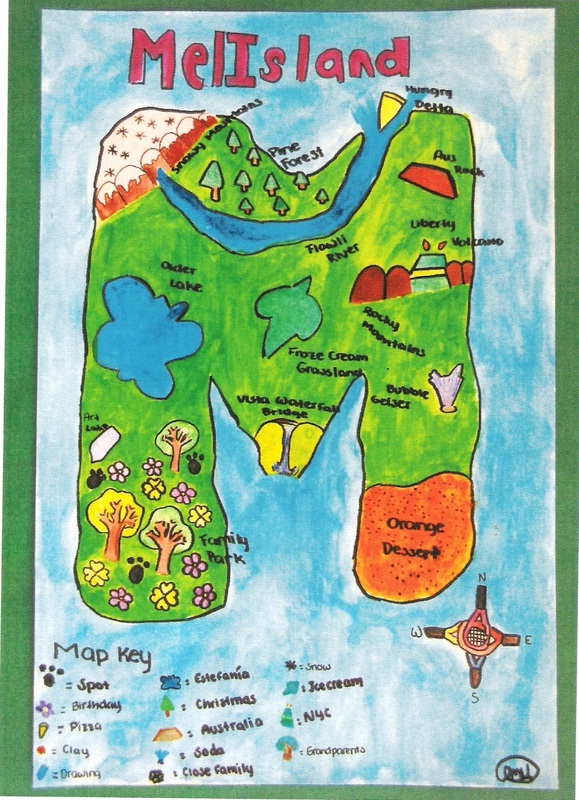
In this lesson, students use the geography skills they have developed to create a map and related materials for an imaginary country. Before beginning the lesson, we will collect a variety of maps that students will be familiar with and use an interactive smart board lesson to learn about the different continents. The students will be arranged into small groups, and each group will be challenged to look over a variety of maps and make a list of the elements that comprise those maps. Students lists will begin with elements such as countries, capitals, boundaries. Then we will gather as a class to share lists and make a class list of map elements.The students then are going to create a country of their own! The first thing they need to do is create a map of the new country, and they will have a graphic organizer to follow throughout the project.

Click Here to access the lesson plan for Project Fifteen.

Saturday, November 2, 2013

Blog Post Eleven

Kathy Cassidy
"Little Kids-Big Potential"


kathycassidy


I really enjoyed seeing Kathy Cassidy’s use of technology with her first graders in the classroom. She uses many techniques and tools such as blogging, wikis, a classroom webpage, Skype, and Nintendo DS in her classroom. There are many great things about blogging such as the student getting to see his or her writing improvement over time. With blogging, the student gets a much wider audience for their work. If she was not using blogging, the students get to write for whom? Just the teacher and maybe their classmates. With blogging, anyone can see their work and seeing how many people view their page, is exciting for children. Having a wider audience might motivate them even more, because of them knowing that anyone can read it. Also, this is a great tool for parents. No more only getting to see our student’s work in a meeting or when the student is working on it. The parent can access the student’s blog from home and see their improvement whenever they have the chance. I would use blogging in my classroom. ipadsWith blogging, they could reflect on their assignments and share ideas on some things we could do in my math classroom. Another great tool she used was her classroom webpage. She uses this webpage not only for updates on the class but for the students searching. They have access to links that Mrs. Cassidy posted that helps their learning. This helps with the safety issue of using search engines. I would surely use a classroom web page in the same way that she did. I might encounter these safety issues, but I think with precise instruction and leaving all the useful links on our webpage will greatly limit any bad things they could possibly access. She also used Wikis. I am not very familiar with this tool, but she used it in the classroom for students to ask questions for people to enter responses to. For example, the students asked about traditions. Different people commented about the personal traditions they have such as brushing their teeth every night. skypeIf I learned more about wikis, I might use them in my classroom. One issue I might encounter is the feedback being negative, or someone might say something my students do not need to see. As a solution, most websites where you can comment have options to where comments can wait for moderation. That way I can approve the comment before it is posted where the students can see it. The other tool she used is Skype. Mrs. Cassidy uses it to chat with other classrooms and experts with her students. I think Skype is a great, great tool. I would use this in my classroom for sure. It is great to gain new perspectives on ideas from other classrooms or even experts on the subjects you are teaching. I think it is important for students to meet people who are using what they are learning everyday. It is important that students know what they are learning will help them in the future. One issue I could possibly see is trying to set up a skype interview during class and having technical failure. There are plenty of other sites that use video, and if that did happen, I would make sure to have those other sites ready for use. The last tool she used was the Nintendo DS. I do not think I would use this in my classroom, because I think it could end up as an distraction. computer technologyAlso, not every kid might have one, and I would rather the focus be on laptops and applying our knowledge to real life situations versus using gaming. I really loved when Mrs. Cassidy said that by not using technology in our classroom, we are “handicapping” ourselves and our students. This is the best way I have heard anyone explain it. Why wouldn’t you use technology in classroom? Have you seen how the world has changed? We can not continue to use the lecture and worksheet classroom. Our students need to know how to be able to use these tools, because technology is not getting any smaller in our lifetime.

Friday, November 1, 2013

C4T #3: Wesley A. Fryer “Expanding the Classroom Menu”

Wesley Fryer

Dr. Wesley Fryer is a google certified teacher who's blog "Moving a the Speed of Creativity" was selected as the 2006 “Best Learning Theory Blog” by eSchoolnews and Discovery Education. He is overall a wonderful inspiration for educators and surely useful for my PLN.


Mapping Media and Narrated Art in Canfield, Ohio (Oct 2013)

In Dr. Fryer’s first post, he uploads two slides that he shared in Canfield, Ohio. His first session is based on the discussion of digital literacy. What does it mean? For Dr. Fryer, it means students and teachers being able to share and make different multimedia products. He covers different examples of student media, how teachers can enhance their digital literacy through different tools. In the second session, he uses a hands on approach to show narrated art samples. I really liked this post, because instead of it being all words, he even gave the hands on activity he used in the conference on his blog. In addition, all of the tools he uses for narrated art samples are very useful! You could use any one of these tools for almost any assignment as a teacher. The first session tells a story about Andrew Vanden Heuvel who uses Google glasses to incorporate his students into his experiences, and I just thought that was amazing. We must expand the classroom menu! We have to give our students more choices on how projects can be done. The more tools we give them access to use, the more unique results we will get!

Here is an excerpt from my post: “First off, I would like to start by saying that this post has really inspired me to become a "story chaser" and share the story of my future classroom. I really enjoyed going through your first video that incorporated the Google glasses. I think the way Andrew Vanden Heuvel shares his experience is a great way for students to explore past their own surroundings. I really like how you said, "expanding the classroom menu." I never thought about all the tools students could use for one project. This would create so many different presentations of the same project for a class.”

mapping media


Good Teachers Make a HUGE Difference – and PD is VITAL! [VIDEO]

In this post, Dr. Fryer shows a video about the importance of good teachers and teachers being lifelong learners. I found this post to be my favorite C4T assignment, because of this video:


WATCH THIS VIDEO! YOU WON’T REGRET IT!


This video just makes me feel great about going into the profession of teaching. We are shaping the minds of our future leaders here, people! This video just really exemplifies the value of a teacher and the important of ongoing professional development opportunities.

Here is an excerpt from my post: ”Thank you so much for sharing this post! I always think about as a future educator how we are shaping our future leader's minds. It is important to not see them just as children, and we realize how important it is to always have ongoing professional development opportunities. I think if more people saw this video, they could see how important teachers are in society.”

Project Ten: Interview Movie


For my interview movie, I met with Mrs. Rigsby, a teacher at Theodore High School. We discussed the "Five Critical Education Issues That Need More Consideration." These issues were posted on the Professional Blog of Andrew Campbell.

Wednesday, October 30, 2013

C4K #2

1. For my first C4K, Briana posted some questions and answers her teacher asked about a book they are reading. She did post the questions and answers so it made it much easier for the reader to understand. She gave great descriptions in her post that made me imagine a character’s voice in my head. I think this is important for blogging, because it shows the educational use and assessment use of blogging. Most blogs I have read by students have been about a topic the students have been given or just free writes. To see Briana’s blog being used to post questions and answers online made me think about how I could do this in my future classroom for assessing students, instead of using tests.

"I like how you included the questions your teacher asked in your post. It makes it much easier for the reader to understand where your comments are coming from. I really liked your comments that you included, but I would have like to have heard some more from you. I liked hearing how you thought Melody's voice sounds. Your description made me imagine her voice in my head."

2. Amily discusses about how her hero is her mom. I heart mom I thought this was very sweet, and told her that I am sure her mom would be so proud to see her blog. I think this is one great thing about blogging. We get to share our ideas and make connections on how we feel. I connected with her love for mom with the love of mine. I was so happy to get to read her post, because It helps me realize the connections we can make in blogging.

"I think it is really great that you see your mom as your hero. I am sure your mom would love to see your blog and how you think she is your hero. I also love my mom very much."

3. Isabella wrote about her hobbies such as ballet and her interest in dissecting animals. This is something I was not fond of, but something that interested me as a reader so I commented back by saying:

"I am glad to see how much you enjoy science and dissecting animals. I get sick dissecting animals, and science is a very hard subject for me. I also really enjoyed reading your post, because you used many details on your potato lab. That seems interesting! I would also love to grow a large sunflower. Thank you for your post."

Animal Frog
After posting my comment, I got a reply from Isabella not to long ago, and I commented back to hers. She asked me about college and why dissecting animals makes me sick. She also said how excited she was that I had commented on her blog, and how she never thought someone would be interested in the blog. For this conversation me and Isabella are having, I am so glad we have these C4K assignments. I am so proud to be able to give Isabella more confidence in blogging.

4. My last four C4K assignment was from Megan, and her post was about the Cardinals in baseball. Although I am not a big fan of baseball, she gave me so many interesting facts to read that I became quite interested in her post. Cardinals She listed different facts such as the year the baseball was made and some people who are in the hall of fame. I really enjoyed reading her post, mainly because it gave me some great insight and opinion on a subject I did not know much about. Her post helped me realized that you can learn new things just from reading blogs and that it is important to read blogs because you may find new information on something that could make you change your mind about things you may not like.

"I love your post mainly because it taught me many things about baseball! I am not a big fan about baseball, but you gave me so many interesting facts that I could be interested in watching the Cardinals now! Thank you for your post, and sharing your facts. Knowing your facts about Mr. Melina makes me think that the Cardinals might win the World Series!"

Sunday, October 27, 2013

Lesson Plan Two

What Will They Think?

What to think

In the What Will They Think? project, students use their understanding of graphing to make predictions, based on a small set of responses, about how a larger group of people will answer questions about ideas for new food products. The class conducts a survey of themselves, then larger groups of their peers. Based on analysis of the data, students compare the effectiveness of their predictions made by educated guessing, hand-drawn graphs, and computer-generated graphs. In the final step, students write a report summarizing their analysis, write a letter to a food-product company explaining their ideas and findings, and make a presentation to an audience.

Please feel free to check out my lesson plan on my Google Site!

Blog Post Ten

What Can We Learn About Teaching and Learning?

In Randy Pausch’s Last Lecture, he discusses his story about how he became successful and achieved his dreams. He discusses many key points that I could learn from about teaching and learning, but there were a few points that really stood out to me such as the importance of dedication and self reflection.

Dedication
My favorite point he made about dedication was about the brickwalls. Brick Walls Quote He says that when things get you down “brick walls” are there, and they are there to let us prove how bad we want things. I think this holds true to both learning and teaching. The key to learning is making mistakes! Sometimes we may not want to climb those brickwalls, but in order to be true learners, we climb those brick walls to show our dedication and determination. He says brick walls stop people who do not want it bad enough, and I think that is very true! As a teacher, it is important for us to help our students get past these brick walls with constant encouragement and support. We must be dedicated to pushing our students, because if they mess up and we are not there to guide them, then that it shows that we, as teachers, gave up on helping them. Teachers and students must “never bail, because the best gold is at the bottom of the barrel of crap.” I found this very influencing and so very true. If we do not complain and just work harder, then when we get to the finish line, the rewards are so much sweeter!

Self-Reflection
One main key Dr. Pausch discusses about is the importance of self-reflection. You self reflect in numerous ways such as through peer feedback, an audience, and the way you treat the people who help you. It is always important to have critics! Hear Call He used peer feedback to show students how they ranked against their peers. For learning, this is great for self reflection because you get a chance to think about how can you improve your process or how you treat others. The one thing as learners and teachers that we must realize is that must listen to this feedback. We have to open our ears, and listen to what others have to say, because feedback is the most valuable tool for learning or teaching. One thing that is also important for self-reflection is having an audience. In Dr. Pausch’s video, he talks about how the students displayed all their work in a show. For teaching, we should always incorporate an audience for our students whether it be their peers, the school, or a public audience. Having an audience gives the students a want to make their work exceptional, because they are showing it to other people. As for self reflection and learning, this is important because it gives you the chance to look at your work and make sure it is acceptable to show to a general public.

A few additional things about learning and teaching that I learned from Dr. Pausch is that it is important to have a PLN. His whole success story is based on the people he got to know. What is also important for learning and teaching is how you say things. There are always good and bad ways to say things, and it is important for anyone to watch the way they say things. It is also important for teaching to not set specific goals. By this he meant, that we must say that what they are doing is good, but they can always do better. By not setting a limitation, we are expanding what the students can do. Also for teaching, you have to make it fun while they are learning something hard. This is great for learning, because how much more do you learn when the project is fun versus when it is boring? One last key thing I learned about learning and teaching is that you must roll with the punches. Dr. Pausch says you will get arrows in your back, and sometimes anything that can go wrong, will go wrong.

Randy Pausch

Saturday, October 19, 2013

Blog Post Nine


Back To The Future

After watching Back To The Future, we were really impressed with Brian Crosby, and all the wonderful ways he enhanced his classroom. Mr. Brian Crosby is a Fourth Grade Elementary teacher at Agnes Risley Elementary School in Sparks, Nevada. In Mr. Crosby's classroom, there is tons of participation going on. Instead of sitting around listening to Mr. Crosby lecture, his class is up doing activities and projects. We learned from this video that participation plays a big role in students’ learning. The video shows that allowing students to participate in activities and projects keeps them more interested in learning versus sitting and listening to a lecture. We also learned a lot about different key elements to a more technology-based, productive classroom that would help with the student’s learning process. Every student in Mr. Crosby’s classroom has access to a computer at their desk. Also, instead of using a quiz or test to check understanding, Mr. Crosby has each student create a blog and post everything they have learned. Their blogs also contain pictures and videos that the students took themselves. We learned that his process is a excellent way to help students connect with others, improve their writing and reading skills, and improve their overall learning process.

The way Mr. Crosby teaches his class is completely outstanding. We learned from this video that it is better for the class to be actively learning, because this shows them that learning doesn't have to be boring. Having students get excited about learning is what we believe all teachers would want. Mr. Crosby’s students learn how to maintain blogs, put videos and pictures on their blogs, video chat with other students from around the world, and much more. All the projects that Mr. Crosby does in his classroom help connect, collaborate, and motivate his students. It is wonderful that his class is ready and eager to learn, and we hope that we can become teachers like Mr. Crosby.


Blended Learning Cycle

Blended Learning CycleWe learned many things about teaching and learning from this video. One of the main things we learned is that it is important to try new things. In this video, Paul Anderson, who is a high school AP Biology teacher in Bozeman, Montana discusses blended learning and how he uses it in his classroom. Blended learning is almost a mixture of instructional based learning with project based learning. For example, one thing we learned about and we really liked was that instead of lecturing to introduce a topic, Mr. Anderson gives his students a video to watch of him discussing the topic. This way he can spend more class time doing other things such as projects. We found this really useful for teaching.
As for learning, we saw many different useful points from Mr. Anderson. One thing he discusses is how students have to be hooked into learning, so our driving question as the teacher must be something they want to respond to- something to spark their interest. Also, he discusses how he used shared spreadsheets so his students could enter in their own data and see the results. This helps the students see their responses and how their engagement creates results. This makes it much easier for the student, because instead of looking at a chart, they are a part of the chart. We would love to use this in our classroom, even to see percentages of how much students like a project or assignment or not. Mr. Anderson uses a quiz just for students to assess themselves, and they get multiple tries to take the quiz. We do like the idea of a quiz just for their self assessment, but we would rather use Mr. Crosby’s ideas of blogging to check understanding.

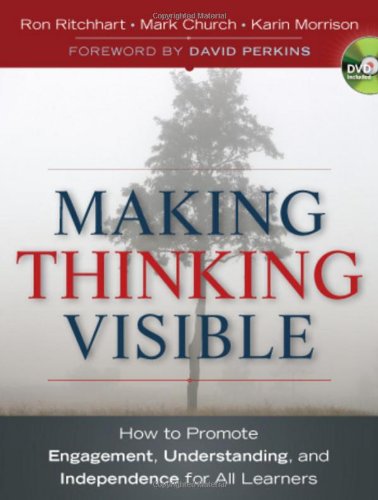
Making Thinking Visible

Mark Church is a sixth grade teacher at the International School of Amsterdam. In the video, he shows the class a video, then divides students into small groups to discuss their ideas and opinions. Each group is then given a big sheet of paper and instructed to come up with a headline that encompasses what they are learning about. Making Thinking Visible

This is a great example of project based learning in action. We really liked the way Church showed the students a video, then let them discuss their ideas in small groups. The students are so much more engaged and involved than they would be if they were sitting through a lecture. Having them come up with a headline encourages both creativity and critical thinking, which are staples of the project based learning method.

We were impressed by the ideas these students were coming up with! Church displays the headlines on bulletin boards, then at the end of the unit the class revisits the assignment to see whether or not their thinking about the topic has changed. This is a great way to show students that thoughts, perspectives and ideas are always changing and evolving. To us, that’s what the learning process is all about.

Saturday, October 12, 2013

Project Nine: Podcast

C4T Assignment Two

Siwak interview For my second C4T assignment, I was assigned to Heidi Siwak, an innovative teacher of technology in Canada. She is an award winning teacher and has been recognized by the globe and mail as one of Canada’s innovative teachers. Her students and her explore integrative and new learning projects, and have won national awards for innovation in technology. Overall, Heidi is a very great role model for teachers trying to apply project based learning in their classroom.

Art as Inquiry: Lessons in Persistence

For my first post to comment on, Mrs. Siwak discusses her experience with teaching art to her sixth grade students. She discusses how she has taught art before, but it has been a while since she has had to. On her first day with her sixth grade students, she starts with a discussion-How do you feel about art as a subject? Types of linesI would have never thought about starting with this question, but it is such a wonderful idea. After asking this question and hearing some responses, she can get past the barriers and negative attitudes that some students may have towards art. She then talks about how the students responded. Some do like art, but more found art frustrating. When told, “tell me more,” many students figured out that the reason they get frustrated with art is because they start with an idea in their head of what their art should look like. Then, when their art does not meet that set expectation, they end up with those feelings of frustration. Siwak continued to surprise me while reading the post. The students start their art process with learning types of lines, and another discussion-“What is it that causes art to look bad? The students then come up with three key components as to how to produce quality pieces of art.

1. Focus
2. Reduced Speed
3. Persistence

The students then made line designs of their names, and were very proud that with the commitment to these three components, their work was of much better quality. They then started to learn about how experimenting artists lines. The next thing that I found extremely useful for an art class was that Mrs. Siwak says instead of them producing art, she asks them to “experiment.” This to me is great, because this takes the pressure of the student that they have to meet someone else’s expectation of quality art. Instead, they get to really enjoy drawing.

Here is an excerpt from my comment:
"I really enjoyed reading your post, because I love art and know how many students get frustrated with it. It was a great idea to change the concept of "creating a piece of art" to "experimenting." This takes pressure and stress off the student. I really enjoyed how through active learning, the students were able to figure out what it is that causes art to look bad. Persistence, slowing down, and focus are a key to doing almost anything 100%."

Communication, Communication, Yes ... and!

For my second post to comment on, Mrs. Siwak discusses how she broke down the processes of communication for students that she feels does not come naturally for most students. communication Most students shy away from true communication and collaboration. She discusses how hard it is for students to fully participate in integrative thinking, because the students have to learn how to be comfortable with hearing their own thoughts as well as others. She then talks about her results in watching the students collaborate. As students become more comfortable, the student’s body chemistry becomes more open and relaxed. Even if they feel uncomfortable, using this confident body chemistry will help them feel more confident. This is very useful information, because of how many students are uncomfortable with collaborating. She also discusses with her students a "yes, and..." idea, instead of a "yes, but..." By doing this, they can accept their own ideas and be positive for others ideas. Her ideas in the classroom are great lessons for upcoming teachers.

Here is an excerpt from my comment:
"I have seen adults who still lack in communication skills with others. I found it really interesting how your students, after working in groups and engaging in conversation, changed their body chemistry. I loved how you said, "I shared the research about body chemistry and how standing in a more confident position causes reactions within their bodies that allows them feel more confident." What a useful piece of information for your students! Also, I have never though about the "yes...and" instead of "yes..but." This really changes the ideas of students and their interaction. They do not have to disagree with anyone this way. For most students, disagreeing is intimidating, which enables them to speak less."